
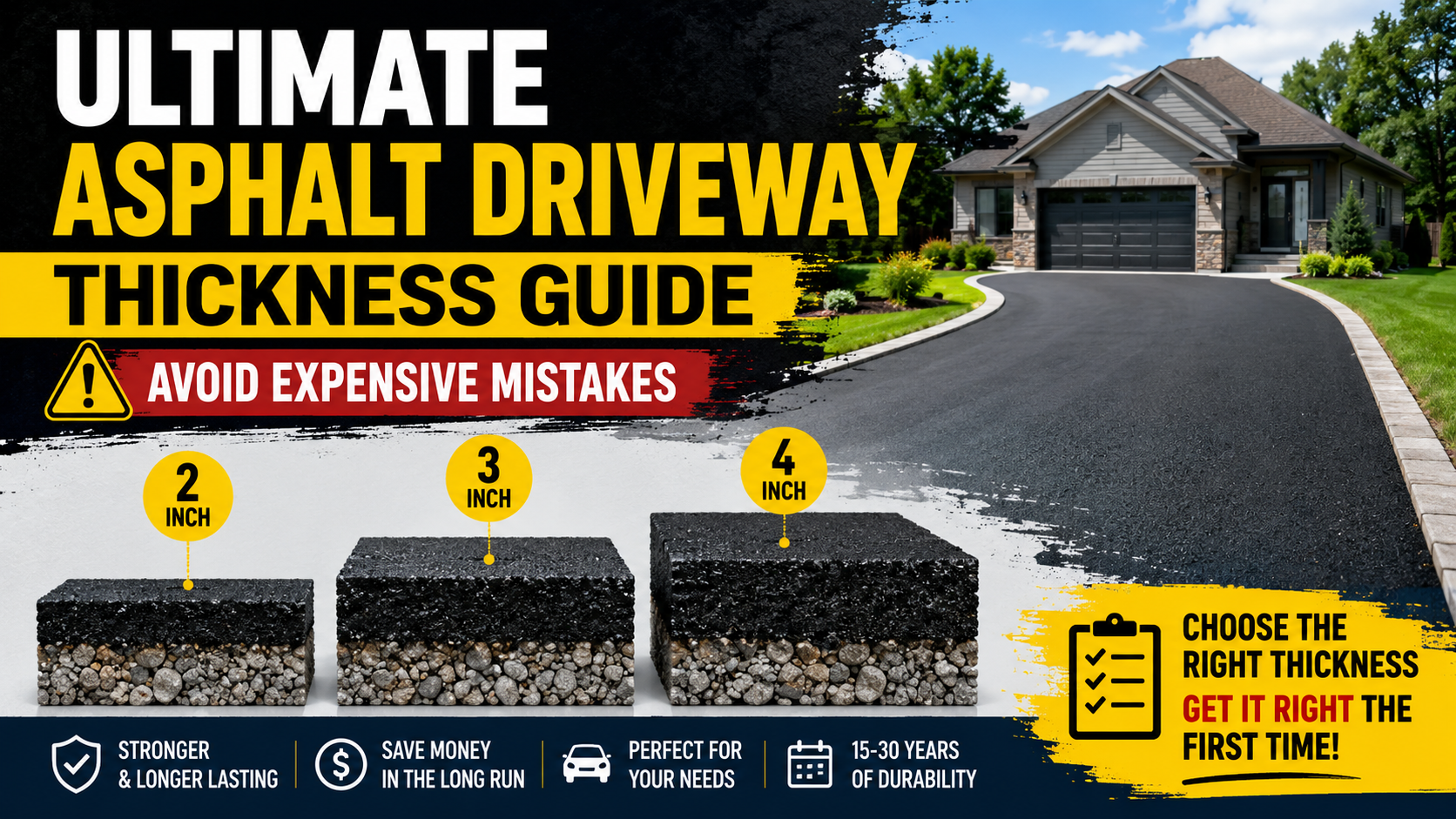
Choosing the right asphalt driveway thickness can save homeowners thousands of dollars in future repairs. Many driveways fail early because the asphalt layer is too thin for the type of traffic it handles every day. A driveway may look smooth after installation, but if the pavement depth is wrong, cracks, sinking, and potholes can appear much sooner than expected.
Most homeowners searching for the best asphalt thickness for driveway projects want a simple answer. The truth is that the correct thickness depends on several factors, including vehicle weight, climate, drainage, soil stability, and the quality of the gravel base underneath the asphalt.
This guide explains the difference between 2-inch, 3-inch, and 4-inch asphalt, the average thickness of asphalt driveway installations, parking lot requirements, and road paving standards. You will also learn how contractors decide the proper pavement depth, how weather affects pavement life, and what mistakes shorten asphalt lifespan.
If you want to estimate asphalt material, project cost, or tonnage before choosing your pavement depth, use the asphalt calculator.
Why Asphalt Thickness Matters More Than Most Homeowners Think
The thickness of asphalt has a direct effect on how long a driveway lasts. Many people focus only on price during installation and forget that thin asphalt usually leads to higher repair costs later. A driveway that cannot handle the daily pressure from vehicles will slowly weaken over time.
The right driveway asphalt thickness spreads vehicle weight across the entire surface and gravel base. This reduces stress in one area and helps prevent cracking. Thicker asphalt also handles temperature changes better in areas with freezing winters or hot summers.
Research from the Federal Highway Administration shows that pavement thickness plays a major role in pavement performance and long-term maintenance costs.
How Asphalt Thickness Affects Lifespan
A thicker asphalt surface usually lasts longer because it resists bending and movement under pressure. When cars, trucks, or SUVs drive over thin pavement every day, the asphalt begins to flex. Over time, small cracks form and eventually grow into larger structural damage.
For most residential projects, a properly installed driveway with the correct thickness of asphalt driveway construction may last between 15 and 30 years. Driveways with thin asphalt layers often need repairs much earlier.
Weather also affects pavement life. In cold states, water can freeze under the asphalt and expand. This movement pushes the pavement upward and creates cracks. A thicker asphalt layer handles this pressure better than a thin surface.
Why Thin Asphalt Fails Early
Thin asphalt often looks fine during the first few years. Problems usually appear later when traffic pressure and weather begin to weaken the structure. A driveway installed with only a thin asphalt layer may develop wheel ruts, edge cracks, potholes, or sinking sections.
Many low-cost paving jobs fail because contractors reduce the asphalt depth to lower installation costs. This may save money at the beginning, but repair costs often become much higher later.
Poor drainage also increases damage. Water that stays under the pavement weakens the gravel base and causes the asphalt to collapse faster.
What Is the Standard Asphalt Driveway Thickness?
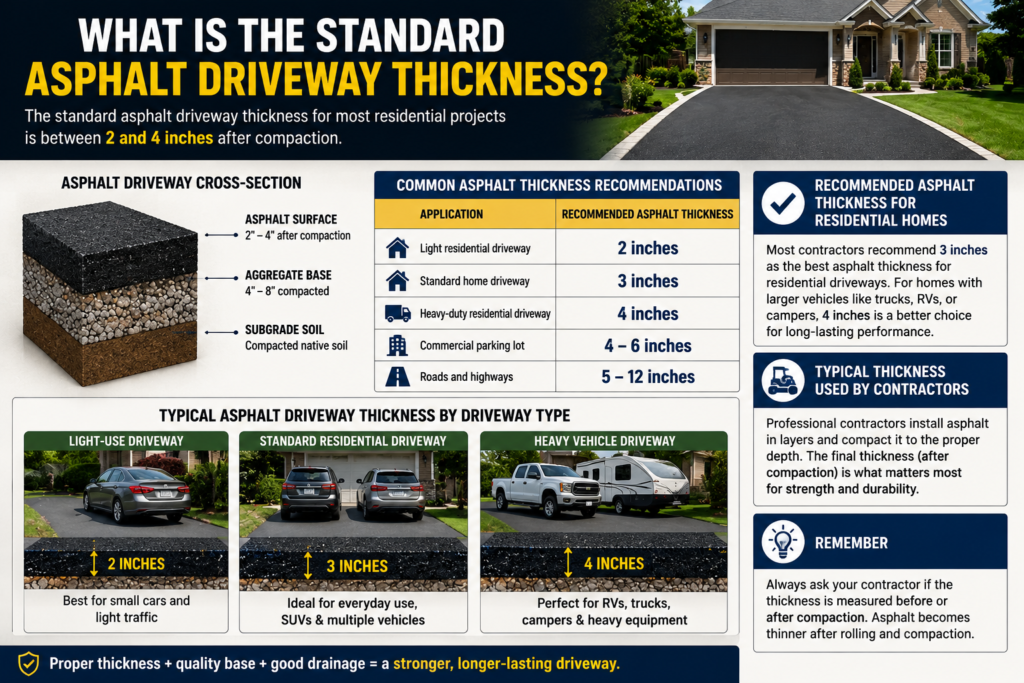
One of the most common questions homeowners ask is, “What is the normal thickness of asphalt driveway installations?” In most residential paving projects, the standard asphalt driveway thickness falls between 2 and 4 inches after compaction.
The final thickness depends on traffic load and driveway usage. A small residential driveway with light traffic may work well with 2 inches of asphalt. A driveway used by pickup trucks, RVs, or heavy equipment usually needs 4 inches or more.
The gravel base below the asphalt also matters. Even thick asphalt can fail if the base underneath is weak or poorly compacted.
Average Thickness of Asphalt Driveways
The average thickness of asphalt driveway projects across the United States is close to 3 inches compacted. This depth gives enough strength for normal residential traffic while keeping installation costs manageable for homeowners.
A 3-inch driveway is commonly used because it balances durability and affordability. It also handles changing weather conditions better than thinner pavement.
The table below shows common asphalt thickness recommendations.
| Application | Recommended Asphalt Thickness |
| Light residential driveway | 2 inches |
| Standard home driveway | 3 inches |
| Heavy-duty residential driveway | 4 inches |
| Commercial parking lot | 4–6 inches |
| Roads and highways | 5–12 inches |
Recommended Asphalt Thickness for Residential Homes
Most contractors recommend 3 inches as the best asphalt thickness for residential driveway projects. This depth gives enough support for daily traffic while helping reduce future cracking problems.
Homes with larger vehicles often need thicker pavement. A driveway that regularly supports work trucks or campers usually performs better with 4 inches of asphalt.
The quality of installation matters just as much as thickness. Proper grading, compaction, and drainage all affect pavement performance.
Typical Thickness Used by Contractors
Professional paving contractors often install asphalt in multiple layers to improve strength. After compaction, the final depth usually reaches the target thickness selected for the project.
The typical asphalt driveway thickness used by experienced contractors is shown below.
| Driveway Type | Typical Thickness |
| Light-use driveway | 2 inches |
| Standard residential driveway | 3 inches |
| Heavy vehicle driveway | 4 inches |
Homeowners should always ask contractors whether the thickness quoted is before or after compaction. Asphalt becomes thinner after rolling and compaction during installation.
Asphalt Driveway Thickness Guide: 2 Inch vs 3 Inch vs 4 Inch Asphalt
Choosing between 2-inch, 3-inch, and 4-inch asphalt depends on how the driveway will be used. Each thickness level has advantages and limitations.
A homeowner with only one passenger vehicle may not need the same pavement depth as someone parking heavy trucks every day.
If you want to estimate asphalt tonnage or compare material costs for different pavement depths, read this Guide: https://calcurax.com/calculate-asphalt-tonnage/
2 Inch Asphalt Thickness
A 2-inch asphalt driveway is often used for small residential projects with light traffic. This option works best in warm climates where freezing temperatures are less common.
The biggest advantage of 2-inch asphalt is the lower installation cost. Less material is required, so the overall project price stays lower.
The downside is reduced durability. Thin pavement handles heavy traffic poorly and may crack sooner under repeated pressure. Areas with unstable soil or freezing weather may experience faster deterioration.
A 2-inch driveway is usually best for small cars, short driveways, light-traffic homes, and mild-climate regions.
Before choosing this option, homeowners should compare long-term maintenance costs against the lower upfront price.
Learn how to calculate asphalt tonnage and project costs accurately with our detailed Asphalt Calculator guide.
3 Inch Asphalt Thickness
A 3-inch driveway is considered the best balance between durability and cost for most homes. Many contractors consider this the recommended asphalt driveway thickness for standard residential paving projects.
This thickness supports SUVs, pickup trucks, and multiple daily vehicles much better than 2-inch asphalt. It also performs better during temperature changes and freeze-thaw cycles.
The typical thickness of asphalt driveway projects in suburban neighborhoods is usually around 3 inches compacted.
Benefits of 3-inch asphalt include better crack resistance, longer pavement life, improved structural strength, and better support for heavier vehicles.
For most homeowners, 3 inches provides enough durability without the higher cost of extra-thick pavement.
Learn how driveway size, thickness, and material prices affect the cost of a 3-inch asphalt driveway in our comprehensive Asphalt Driveway Cost Calculator guide.
4 Inch Asphalt Thickness
A 4-inch asphalt driveway is built for heavy-duty performance. This thickness works well for homes with RVs, trailers, work trucks, or commercial vehicles.
Although installation costs are higher, thicker asphalt usually lowers repair frequency over time. Heavy vehicles create much more pavement stress than standard passenger cars.
According to pavement engineering research, axle weight has a major effect on asphalt wear and pavement lifespan.
The main benefits of 4-inch asphalt include better support for heavy loads, reduced cracking risk, longer lifespan, and stronger structural performance.
This option is often recommended for long rural driveways and commercial-style residential properties.
Best Asphalt Thickness for Residential Driveways
The best residential asphalt driveway thickness depends on how the driveway will be used over the next several years. A homeowner planning to buy larger vehicles later may benefit from thicker pavement now instead of paying for repairs later.
Single-Car Driveways
Single-car driveways usually handle light traffic and smaller vehicles. In many cases, 2 to 3 inches of asphalt provides enough support if the gravel base is stable and drainage is good.
A thin asphalt layer may still fail if the driveway sits on weak soil or holds standing water after rain.
Two-Car Driveways
Most two-car households perform best with 3 inches of asphalt. This thickness handles multiple vehicles, regular use, and occasional delivery trucks better than thinner pavement.
A properly compacted 3-inch driveway often gives homeowners the best value over time.
RV and Heavy Vehicle Driveways
Driveways used by RVs, campers, trailers, or commercial vehicles usually need at least 4 inches of asphalt after compaction.
Heavy vehicles create pressure that can quickly damage thin pavement. In some cases, contractors may recommend thicker gravel bases along with thicker asphalt surfaces.
Asphalt Thickness for Driveway Projects Based on Usage
The amount of traffic on a driveway directly affects pavement performance. A driveway used only a few times per day will not experience the same wear as a busy residential or commercial entrance.
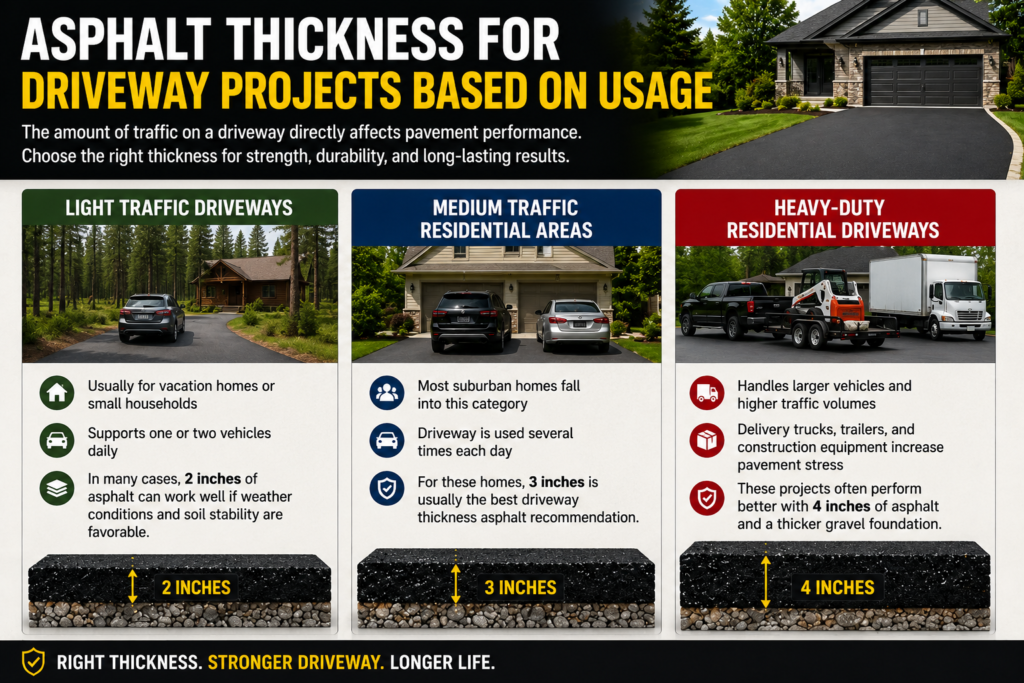
Light Traffic Driveways
Light traffic driveways usually belong to vacation homes or smaller households. These driveways may only support one or two vehicles daily.
In many cases, 2 inches of asphalt can work well if weather conditions and soil stability are favorable.
Medium Traffic Residential Areas
Most suburban homes fall into this category. Families with multiple vehicles often use their driveway several times each day.
For these homes, 3 inches is usually the best driveway thickness asphalt recommendation.
Heavy-Duty Residential Driveways
Heavy-duty driveways handle larger vehicles and higher traffic volumes. Delivery trucks, trailers, and construction equipment all increase pavement stress.
These projects often perform better with 4 inches of asphalt and a thicker gravel foundation.
Asphalt Thickness Chart for Different Applications
The correct asphalt depth changes depending on the type of project. Residential driveways, parking lots, and highways all require different pavement structures.
The table below gives a quick overview of common paving applications.
| Project Type | Asphalt Thickness |
| Light residential driveway | 2 inches |
| Standard residential driveway | 3 inches |
| Heavy-duty residential driveway | 4 inches |
| Commercial parking lot | 4–6 inches |
| Residential roads | 5 inches |
| Highways | 8–12 inches |
This asphalt driveway thickness chart helps homeowners compare different paving needs quickly before meeting with contractors.
Frequently Asked Questions (FAQs)
What Is the Best Asphalt Driveway Thickness for Most Homes?
For most residential homes, 3 inches of compacted asphalt is considered the best asphalt driveway thickness. It gives enough strength for daily traffic, SUVs, pickup trucks, and changing weather conditions. Homes with RVs or heavier vehicles may need 4 inches for better durability.
Is 2 Inches of Asphalt Thick Enough for a Driveway?
A 2-inch driveway can work for light residential use with small cars and limited traffic. However, thinner pavement usually wears out faster in cold climates or areas with heavy vehicles. Many contractors recommend 3 inches for longer pavement life.
What Is the Standard Asphalt Driveway Thickness?
The standard asphalt driveway thickness for residential projects is usually between 2 and 4 inches after compaction. Most homeowners choose 3 inches because it offers a good balance between cost and durability.
How Long Does an Asphalt Driveway Last?
A properly installed asphalt driveway can last between 15 and 30 years. Lifespan depends on pavement thickness, drainage, climate, traffic, and maintenance. Thin asphalt and poor installation often shorten pavement life.
Does Thicker Asphalt Last Longer?
Yes, thicker asphalt generally lasts longer because it handles vehicle pressure better and resists cracking. A thicker driveway also performs better during freeze-thaw cycles and heavy traffic conditions.
What Is the Average Thickness of Asphalt Driveway Installations?
The average thickness of asphalt driveway installations in the United States is around 3 inches compacted. This thickness works well for most residential properties and provides good long-term performance.
How Thick Should Asphalt Be for Heavy Trucks or RVs?
Driveways that support RVs, trailers, or heavy trucks usually need at least 4 inches of asphalt. Some projects may also require a thicker gravel base to handle extra vehicle weight safely.
Does the Gravel Base Affect Asphalt Driveway Thickness?
Yes, the gravel base plays a major role in pavement performance. Even thick asphalt can crack if the base underneath is weak or poorly compacted. A strong base helps distribute weight and improves drainage.
What Happens If Asphalt Is Too Thin?
Thin asphalt often develops cracks, potholes, edge damage, and tire depressions much faster. Water can also enter weak areas and damage the pavement structure underneath.
How Can I Estimate the Asphalt Needed for My Driveway?
You can estimate asphalt tonnage, pavement depth, and project cost by using an online calculator. This helps homeowners compare different thickness options before starting a paving project.
Final Thoughts on Choosing the Right Asphalt Driveway Thickness
Choosing the right asphalt driveway thickness is one of the biggest factors that affects how long your driveway will last. A driveway that is too thin may crack early, develop potholes, or fail under heavy traffic. On the other hand, the right pavement depth gives better durability, lower maintenance costs, and stronger long-term performance.
For most homes, 3 inches is considered the recommended asphalt driveway thickness because it handles normal residential traffic well while offering good value over time. Homes with RVs, trailers, or work trucks often perform better with 4 inches of asphalt and a stronger gravel base underneath.
Climate, drainage, soil condition, and vehicle weight all play a role when deciding the proper asphalt thickness for driveway projects. Even the best asphalt material may fail if the base preparation and compaction are poor. That is why homeowners should always work with experienced paving contractors and ask detailed questions about compacted thickness before installation begins.
If you are still comparing options, reviewing an asphalt driveway thickness chart and estimating material quantities can make the decision much easier. Taking time to plan the right thickness now can help prevent expensive repairs later.